

I’m going to be honest with you.
I run a cleaning company, and for a long time, my own house was chaos.
Not because I didn’t know how to clean. Obviously I knew how to clean. But knowing how to do something and actually having a household that functions are two completely different problems.
For a while, I was solving the wrong one.
I was doing too much myself, asking too many times, and wondering why nothing seemed to stick.
Sound familiar?
And if your kids are home for the school holidays right now, you might be feeling the pressure of that even more. When everyone’s home more often, the jobs seem to multiply and the little things that usually get squeezed into the week have nowhere to hide.
What finally changed things in our house wasn’t more effort.
It was a system.
And once I found it, I couldn’t believe I’d spent so long without one.
Why nagging doesn’t work (and I say this as someone who tried it for years)
The usual approach – asking, reminding, repeating, escalating – feels like it should work.
It doesn’t. Not long-term.
When children are constantly prompted to do something, they can learn to wait for the prompt rather than recognise the responsibility themselves. The moment the pressure lifts, the behaviour often goes with it.
I saw this play out in my own home constantly.
The same conversations. The same reminders. The same jobs coming back around.
What eventually helped was taking the negotiation out of it.
Instead of deciding who would do what each time, we made certain responsibilities part of how our household worked.
That small shift made a surprisingly big difference.
What task blocking is and why it works
Task blocking is simply assigning specific household responsibilities to specific people in predictable, repeating ways.
Instead of tasks being picked up by whoever notices them first, everyone knows what belongs to them.

Because when responsibility is vague, it’s very easy for everyone to assume someone else has it covered.
Nobody necessarily thinks they’re being lazy.
They just think someone else is across it.
I know because I’ve lived it.
Once the responsibility is clear, there is far less room for “I thought you were doing that.”
And that clarity is what makes the system work.
Matching responsibility to age
This is the part that took me a while to get right.
Older children and teenagers
Teenagers are capable of managing their own laundry and cleaning up after themselves in the kitchen.
Fully.
I know it might not feel that way right now, but they are.
Giving older children genuine household responsibilities helps them practise the skills they’ll eventually need to manage their own homes and lives.
The key shift for me was making the responsibility theirs.
Not “help with the laundry.”
Their laundry.
If it piles up, they’re the one who has to deal with it.
That’s very different from waiting for Mum to notice and remind them.

Younger children
Younger children aren’t ready for that level of independence, but they’re often capable of contributing more than we give them credit for.
I’ve seen this with my own kids and across hundreds of family homes through our work.
It doesn’t need to be complicated.
For younger children, it might be:
- Wiping the table after dinner
- Sorting socks from the laundry basket
- Putting their toys away before bed
- Carrying their plate to the sink
They’re small jobs, but they teach something bigger: I am part of this household, and I contribute to it.
That’s the habit you’re building.

A simple way to start during the school holidays
If your normal school-week routine has already changed, you don’t need to wait until everything goes back to normal to introduce a few new responsibilities.
The holidays can be a good opportunity to start small.
Pick one or two jobs that are appropriate for each child.
Make it clear who does what.
Then stick with it.
You don’t need a complicated chore chart or a perfect schedule. The important part is that the expectation is clear enough that your children don’t have to wait for you to tell them every time.
And give them room to learn.
Which brings me to something I wish I’d understood much earlier…
Don’t expect them to do it like you would
Your kids will not do these tasks to your standard.
Especially at first.
And that’s okay.
One of the hardest things for me was resisting the urge to take the job back because it wasn’t being done exactly how I would have done it.
But if I corrected every little thing, I was still the one carrying the responsibility.
A teenager who does their own laundry badly for six months will probably do it better by month seven.
A teenager who never does it will still need managing years later.
Let the standard drop a little.
The skill comes with practice.
The habit is what you’re building.
The bathroom rotation that changed things for us
If I had to recommend one structural change to any family, it would be this.
A rotating bathroom roster.
Each week, the responsibility moves to someone else.
Everyone who uses the bathroom contributes, and everyone knows in advance when it’s their turn.
For us, this removed one of the most predictable sources of friction.
I wasn’t constantly keeping track of who had done what or deciding whose turn it was.
The roster did that for me.
And that is really the point of a good household system.
It takes something that used to live in your head and puts it somewhere everyone can see and understand.
If You’re Not Ready For Help Yet
That’s okay. Lower the bar, strategically.
Rotate instead of maintaining everything:
Week 1: Bathrooms
Week 2: Kitchen
Week 3: Floors
Week 4: Windows
Everything else can stay “good enough.”
Lower the standard to functional:
Bathroom usable? Enough. Kitchen workable? Good. Floors safe to walk on? You’re doing fine.
Your capacity matters more than perfection.
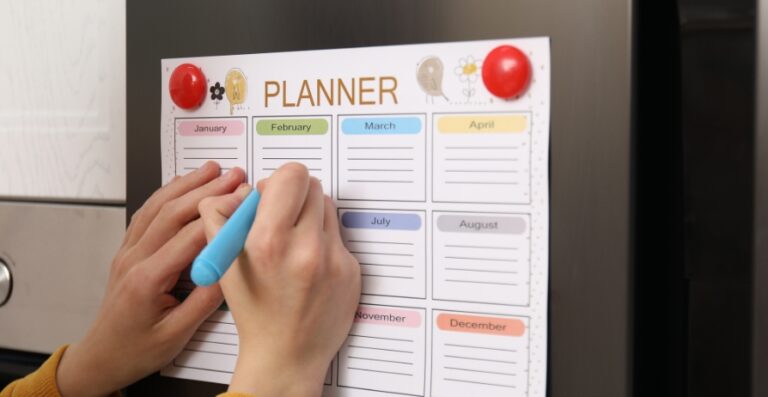

Once these systems started working in our house, I noticed something interesting.
The conversations changed.
Instead of asking who was going to do the dishes, the person responsible for their dishes simply knew they were theirs.
Instead of one enormous family laundry pile, everyone had ownership of their own.
Instead of me mentally keeping track of every little job, there were things I no longer needed to think about at all.
That was the real win.
Not a perfectly clean house.
Less for me to hold in my head.

This is the part I wish someone had explained to me earlier.
The exhausting part of managing a home isn’t always the physical work.
It’s remembering.
Who needs to do what. Who hasn’t done it. What needs buying. What’s been sitting there for three days. Who needs reminding.
That invisible list can follow you around all day.
When other people genuinely own parts of the household, some of that list disappears.
Not because the house suddenly runs itself.
Because you aren’t the only person responsible for keeping it running.
That was more valuable to me than having someone simply help me with a few extra jobs.
When the system slips
Of course, it will.
Someone gets sick. Work gets busy. School starts again. The holidays throw everything out of rhythm.
That’s normal.
It doesn’t mean the system has failed.
When things get off track, I find it works better to simply reset than turn it into a big conversation.
“We’ve gotten a bit off track. We’re starting again this week.”
That’s it.
The habit is built through returning to it, not through getting everything right the first time.
A note on perfection
I don’t want you reading this thinking your house now needs a perfectly organised chore system.
It doesn’t.
Your kids will forget.
They’ll complain.
Some jobs will be done badly.
Some weeks, the whole thing will fall apart.
That’s family life.
The goal isn’t to create another thing for you to manage.
It’s to gradually create a home where responsibility is shared instead of automatically landing on the person who notices everything first.
That was the change I needed in my own home.

I started The Clean Life because I understand what it feels like to carry too much at home.
I’ve lived it.
I still navigate it.
And while having systems in place genuinely helped me, I also know there are seasons when even the best system isn’t enough.
Sometimes you just need someone to come in and help you reset.
There’s no shame in that.
You don’t have to wait until you’re completely overwhelmed, and you don’t have to apologise for needing support.
If that’s where you are right now, that’s what we’re here for.
No judgement. Just practical support while you find your footing.
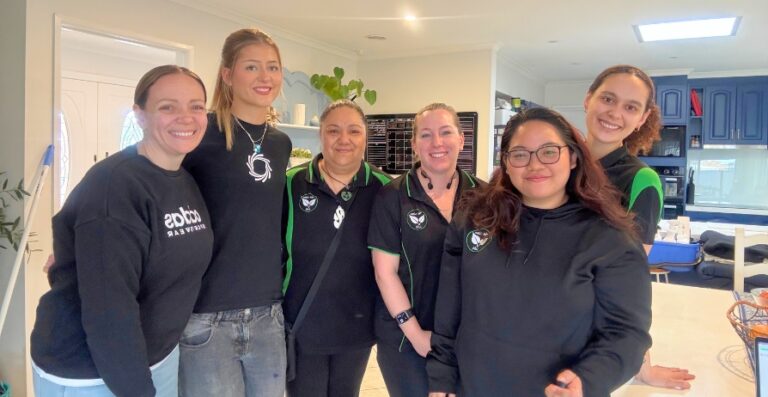
Proudly servicing Melbourne South East – Frankston, Bayside, Mornington Peninsula, Western Port and surrounding suburbs 💚