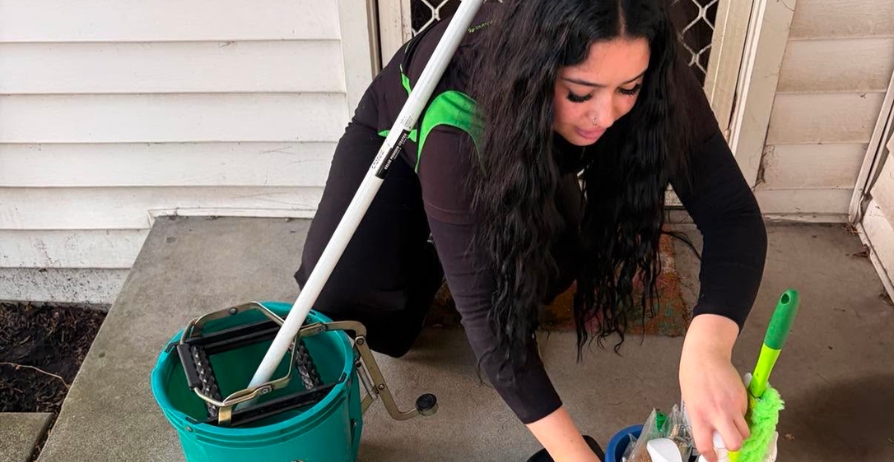

There’s a particular kind of weight that builds in homes where people are overwhelmed. It doesn’t announce itself. It doesn’t arrive all at once. It shows up in small decisions. Not inviting people over. Rehearsing an apology before anyone even walks through the door. Spending the hour before your appointment frantically tidying the home you hired someone else to clean. If you’ve been putting off booking cleaning support – what we at The Clean Life call a Home Specialist – because your home feels too messy, too embarrassing, or just too much right now, this is worth reading. Because what you’re experiencing has a name. And it’s not laziness. Researchers who study shame make an important distinction: shame is about the self, not the situation. Guilt says I did something wrong. Shame says I am something wrong. This matters when it comes to household mess. When someone looks at a pile of laundry or an unwashed sink and thinks I’m failing rather than I’ve had a hard week, shame has moved in. And shame, unlike guilt, doesn’t inspire change. It paralyses. It makes people less likely to ask for help, less likely to take action, and more likely to avoid the very things that could improve the situation. The shame of a messy home often makes the messy home worse. And the longer it goes on, the heavier both become. One of the most common things people do before a professional clean is spend hours cleaning first. On the surface, this feels logical. It’s actually a shame response. The internal script usually sounds something like: I can’t let them see it like this. They’ll think less of me. I need to make it at least presentable before they arrive. This is the voice of shame, specifically the fear of being judged by someone else. And the problem with it isn’t just the wasted energy. It’s the delayed relief. The one window you had to rest, the hour before they arrived, spent doing the very thing you hired someone else to do. You don’t need to clean before your Home Specialist arrives. Not because standards don’t matter, but because the mess you’re embarrassed about is exactly what they’re there for. People who work professionally in homes develop a kind of neutrality toward household mess that’s hard to explain until you’ve seen it. It’s not that they don’t notice. It’s that the context they bring is completely different from the story you’re telling yourself. Where you see evidence of failure, they see a busy household. Where you see something to be ashamed of, they see a job they’re glad to do. Our Home Specialists genuinely care about the people in the homes they work in. But that care doesn’t come with judgement. After working across hundreds of homes and all kinds of life circumstances, the range of what’s “normal” looks nothing like what shame tells you it does. The home you’re embarrassed about is more ordinary than you think. The person coming to help has almost certainly seen the same thing, or something far more overwhelming, many times before. There’s a concept in psychology called attentional capture: the brain’s tendency to fixate on unresolved tasks. Household mess is particularly good at triggering this. Every grimy surface, every room you’re avoiding, every cluttered corner is an open loop in your mind. Something unfinished. Something still requiring attention. Research on cognitive load shows that the more of these we carry, the less capacity we have for everything else. This is why a messy home often feels more oppressive than it looks. The floor plan hasn’t changed, but the number of incomplete tasks living in your peripheral vision has. And they consume the mental energy you were hoping to use for everything else. A clean home doesn’t just look different. It feels cognitively lighter. Fewer open loops. Fewer visual reminders of things undone. More space to think, rest, and actually be present. This is why people who book their first professional clean so often say the same thing: I didn’t realise how much it was weighing on me until it was gone. There’s a broader cultural script at play here, particularly for parents, carers, and people managing a lot at once. Most of us absorbed the message, without anyone saying it directly, that capability means doing everything independently. That asking for help signals weakness. That other people are coping fine, so why aren’t you? But here’s what the research actually shows: practical support, including help with domestic tasks, is one of the most reliable protective factors against burnout, depression, and chronic stress. People who ask for help don’t cope worse. They cope better. Not because the help solves everything, but because not carrying everything alone lightens the load of simply getting through a difficult season. Asking for support isn’t evidence that you’re failing. It’s evidence that you know your own limits. That’s self-awareness, not weakness. Something worth naming honestly. Sometimes a home that’s gotten out of hand is a sign of something difficult going on. Depression affects motivation and energy in ways that make daily tasks feel impossible. So does anxiety, chronic illness, ADHD, grief, and burnout. In these situations, “just clean more” isn’t useful advice, and the shame that comes with being unable to follow it makes everything worse. If the state of your home is reflecting something painful happening inside it, a Home Specialist won’t resolve what’s underneath. But they might remove one layer of pressure at a time when every layer counts. Relief isn’t the same as a solution. But it’s still real. And sometimes it’s what creates just enough space to begin addressing everything else. There’s a quieter myth worth addressing: that cleaning support is something you turn to only when things have genuinely fallen apart. Maintaining a home with consistent support